Welcome to this edition of the Mitrais SWD Newsletter.
A clear theme runs through this issue: how to build technology that moves fast, creates real business value, and still holds up over time. It is something we see across almost every client engagement, and it only becomes more pressing as the pace of change accelerates.
We begin with a look at what to consider when choosing a software development partner, especially when speed and standards both matters. Fast delivery and strong compliance are often seen as trade-offs, but in practice, the best outcomes come when security, quality, and governance are built into the process from the start. When done properly, those things do not slow delivery down. They make it stronger and more sustainable.
That same principle is reflected in our work with GoGrain. Built from real industry experience, the platform was designed to solve practical operational challenges in agriculture improving visibility, reducing risk, and delivering measurable outcomes. Just as importantly, the story highlights the value of true partnership: working closely, responding quickly, and building trust through real operational demands.
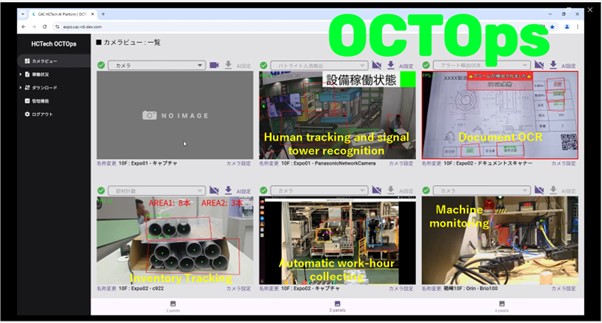
We also feature OCTOps, which shows how AI can bring more value from existing operational infrastructure. By turning CCTV systems into tools for actionable insight, organisations can strengthen visibility across productivity, quality, and safety without the need for significant new hardware investment.
Finally, we introduce Eric Vongphit, one of our Solutions Consultants based in Sydney. Eric’s journey across engineering, leadership, and consulting reflects a mindset we value strongly at Mitrais: understand the real problem, think beyond the short term, and build solutions that are both technically sound and commercially practical.
Thank you for reading. We hope this edition gives you something worth taking back to your work.
Develop Better, Deliver Faster: The Power of Speed and Quality in Selecting a Software Development Partner
Formula 1 is widely regarded as the pinnacle of global motor racing. The sport is distinguished by its exceptionally fast cars, highly skilled drivers, cutting-edge technological innovation, and rigorously defined standard procedures. Teams invest hundreds of millions of dollars each season chasing the smallest performance gains, yet every car on the grid must still comply with a strict set of technical regulations set by the FIA. Go too fast through a loophole, and the team risks disqualification. Fall behind on performance, and the championship is out of reach. The best teams have mastered both, and that is precisely what separates champions from the rest. This same dynamic is at the heart of software development. Speed matters. So does getting it right. The organisations that consistently achieve both tend to share one thing in common: a clear-eyed approach to how they select and work with their development partners.
Yet for many organisations, this balance proves difficult to find in practice. The software development partner market is crowded, claims are difficult to verify, and the variables that matter most, reliability, compliance maturity, domain expertise are not always visible during the evaluation process. Too often, organisations discover after engagement that their partner optimises for one dimension at the expense of the other: fast delivery that accumulates technical debt, or rigorous process that slows momentum. Both outcomes carry real business cost, and both are avoidable with a clearer understanding of what genuine capability looks like.
Software development partners that consistently deliver both speed and standards compliance tend to share a common structural approach. Rather than treating delivery velocity and compliance obligations as separate workstreams, they embed security-by-design principles, DevSecOps practices, and alignment with internationally recognised frameworks such as ISO 27001 from the outset. This integration is what allows solutions to be developed efficiently without regulatory and quality obligations becoming a late-stage liability.
The sections below outline what organisations should look for when assessing a software development partner, examined across three areas that together define what a strong partnership looks like in practice:
Mechanisms for Speed (Strategic Enablers of Fast Delivery)
Experienced Teams, Available on Demand
Established technology partners typically maintain teams of experienced engineers and architects who can be deployed without the lag of a traditional hiring process. This model allows organisations to scale delivery capacity more responsively, particularly during periods of increased demand or tight project timelines.
Institutionalised Agile and DevOps Practices
Partners with mature delivery practices embed Agile frameworks such as Scrum and Kanban alongside DevOps and CI/CD pipelines. This operating model supports rapid iteration and shorter release cycles, while reducing the bottlenecks that commonly arise when development and operations are siloed.
Global Delivery Models (Nearshore)
Nearshore delivery models, where teams operate within similar or overlapping time zones, offer a practical way to extend development capacity without the coordination challenges often associated with fully offshore arrangements. For many organisations, this approach reduces time-to-market while keeping communication friction low.
Deep Domain and Industry Expertise
Partners with established vertical knowledge in areas such as financial services, healthcare, or telecommunications bring familiarity with the regulatory environments, customer expectations, and industry workflows that shape those sectors. In practice, this tends to reduce ramp-up time and the risk of rework, as teams are less likely to make assumptions that later require correction.
Ensuring Standards Compliance
Compliance-by-Design Principles
Rather than treating compliance as a final validation step, well-structured partners integrate regulatory and standards requirements directly into each phase of the Software Development Life Cycle (SDLC). Addressing compliance early typically reduces late-stage rework and makes the overall development process more predictable.
Rigorous Secure Coding Practices
Development teams working within recognised security frameworks follow established coding standards designed to reduce the likelihood of vulnerabilities. Common practices include encryption protocols, systematic code reviews, and continuous security testing, each contributing to the overall integrity of the delivered system.
Adherence to Regulatory Frameworks
Sector-specific regulations such as GDPR for data privacy, HIPAA for healthcare data protection, and various financial regulatory requirements set the minimum bar for many software projects. Partners with experience in regulated industries understand how to build these requirements into their delivery process, rather than retrofitting compliance after the fact.
Compliance-Focused Tools and Automation
Automated tools play a practical role in maintaining consistent quality. Platforms such as SonarQube for static code analysis, alongside continuous compliance monitoring solutions, make it easier to identify deviations early in the development cycle rather than discovering them during testing or post-deployment.
Key Partner Characteristics
Demonstrated Compliance Through Recognised Certifications
Internationally recognised certifications such as ISO 27001 for information security management provide a degree of independent verification of a partner’s operational practices. While certifications alone are not sufficient due diligence, they offer a useful baseline when assessing a partner’s commitment to security and process maturity.
Highly Experienced and Competent Talent Base
A partner’s track record across diverse industries is often one of the more reliable indicators of capability. Teams that have navigated varying regulatory environments and delivered across different sectors tend to bring more grounded judgement to new engagements, which can meaningfully reduce delivery risk.
Robust Governance, Communication, and Operational Transparency
Clear governance structures, defined delivery processes, and consistent communication channels are often what separate successful long-term partnerships from engagements that start well but lose momentum. Transparency around reporting, risk escalation, and workflow predictability makes it easier for internal stakeholders to stay aligned with external delivery teams.
Knowing what to look for in a software development partner is a necessary starting point. But the sharper question for any senior leader is: what is actually at stake in getting this decision right, and what does it cost when it goes wrong?
Why This Decision Defines More Than the Project
The capabilities outlined above, delivery speed, embedded compliance, experienced talent, and transparent governance are not just indicators of a well-run partner. They are the foundations on which business outcomes are built or undermined. A partner that is strong across all three areas creates the conditions for an organisation to move quickly, confidently, and without accumulating the kind of hidden liabilities that constrain future growth.
Conversely, the costs of a poor choice rarely surface immediately. Technical debt accumulates gradually, compliance gaps go undetected until they become audit findings, and systems that were fast to build become expensive to maintain. By the time these issues are visible, they are already costly to reverse. This is the hidden risk in prioritising speed over rigour, or rigour over speed: both trade-offs eventually demand repayment, with interest.
When a partner genuinely integrates both dimensions, the benefits compound over time. Consistent standards reduce ambiguity and rework, making each subsequent release faster and more predictable than the last. Shared governance structures keep internal and external teams aligned without friction. And a delivery model that is built for compliance from the outset means that regulatory obligations are met as a natural output of good practice, not as a separate burden layered on top of it.
The quality of a development partnership is ultimately reflected in the product that reaches customers. Software that performs reliably, behaves predictably, and meets security expectations builds organisational credibility in ways that speed alone cannot. In a market where trust is a genuine competitive differentiator, the standards embedded in a partner’s delivery practice have a direct bearing on the reputation of the organisation they serve.
This is why Formula 1 remains a useful reference point. In that sport, no team wins a championship by choosing between a fast car and a compliant one. The regulations are not a burden to work around; they are the shared conditions within which excellence is defined and measured. The teams that thrive are the ones that have built an organisation capable of operating at the highest level on both dimensions simultaneously. The same standard applies when selecting a software development partner. The goal is not to find a partner that manages the trade-off well. It is to find one for whom the trade-off does not exist.
GoGrain: Digitising Grain Operations for Faster and Smarter Decisions
Tim didn’t set out to build a tech company. He was behind the wheel of a harvester, watching truckloads of grain disappear down the highway with nothing but paper to track them, when GoGrain was born.
What followed was a platform now recovering hundreds of thousands of dollars in misallocated grain for farmers across Australia, and a partnership with Mitrais that Tim describes as a team who took the product on as if it were their own baby.
From the eureka moment in the field, to the grandfather watching harvest unfold from the golf course to a $12,000 loss proven with nothing but a phone, this is a story about what happens when real problems meet the right people.
OCTOps for Manufacturing and Logistics: Visual Intelligence as the Foundation of Modern Industrial Operations
Executive Summary
Manufacturing and logistics organisations are operating in an environment of unprecedented complexity. Production volumes are increasing, product variation is accelerating, skilled labour availability is tightening, and safety and quality expectations continue to rise. In response, companies have invested heavily in automation, enterprise systems, and analytics platforms. Yet a critical layer of operational reality remains largely unmeasured: what is physically happening on the factory floor and across logistics facilities in real time.
Despite the widespread presence of cameras in manufacturing plants and warehouses, visual data is still treated primarily as a security asset rather than an operational one. At the same time, artificial intelligence initiatives often focus on narrow use cases, such as defect detection or people counting without delivering an integrated view of operations or sustained long-term value.
OCTOps addresses this gap by transforming existing camera infrastructure into a unified visual intelligence platform. Purpose-built for manufacturing and logistics environments, OCTOps converts live video streams into actionable operational insights across productivity, quality, safety, inventory flow, and equipment monitoring. By combining edge-based AI processing with centralised orchestration and continuous learning, OCTOps enables organisations to move from reactive oversight to proactive, data-driven operations.
For manufacturing and logistics leaders, OCTOps delivers tangible business outcomes: reduced manual inventory counting effort, more stable production throughput, faster response to equipment abnormalities, and stronger safety enforcement across sites. By leveraging existing camera infrastructure, organisation can achieve these gains without major new hardware investments.
The Visibility Challenge in Manufacturing and Logistics
Operational excellence in manufacturing and logistics depends on visibility. While digital systems such as ERP, MES, and WMS provide structured transactional data, they do not capture how work is actually executed in physical space. As a result, many critical operational factors remain inferred rather than measured.
On production lines, quality issues are often identified only after downstream processes are affected. In warehouses and distribution centres, inventory accuracy depends heavily on manual counting and reconciliation. Labour productivity is estimated through schedules and reports rather than observed in real time. Equipment failures are detected after alarms are raised locally or when downtime has already occurred. Safety compliance relies on periodic supervision rather than continuous enforcement.
These gaps are not the result of a lack of technology, but of fragmented visibility. Cameras are already deployed throughout industrial environments, yet their potential as operational sensors remains largely untapped. Without a way to systematically analyse visual data at scale, organisations continue to rely on manual processes that are costly, inconsistent, and slow to respond.
As operational complexity increases, these blind spots become more expensive. Delays, rework, safety incidents, inventory discrepancies, and unplanned downtime all stem from the same root cause: insufficient real-time understanding of physical operations.
From Surveillance to Visual Intelligence
Traditional camera systems are designed for retrospective review. Footage is examined after an incident has occurred, often providing context but rarely preventing the problem itself. In contrast, modern industrial operations require systems that can interpret visual information as it happens and trigger action immediately.
Visual intelligence represents a fundamental shift in how camera data is used. Rather than serving as passive observers, cameras become intelligent sensors capable of detecting patterns, anomalies, and behaviours that matter operationally. This requires more than computer vision models operating in isolation, it requires a platform that can manage, deploy, and continuously improve AI across diverse environments.
OCTOps is designed around this principle. It integrates directly with existing camera infrastructure and applies AI analysis at the edge, ensuring real-time responsiveness even in bandwidth-constrained or latency-sensitive environments. At the same time, it provides centralised orchestration in the cloud, enabling consistent governance, monitoring, and improvement across multiple facilities.
By treating visual data as a first-class operational signal, OCTOps enables manufacturers and logistics providers to close the gap between physical reality and digital intelligence.
Visual Intelligence Use Cases in Industrial Operations
Labour Productivity and Man-Hour Intelligence
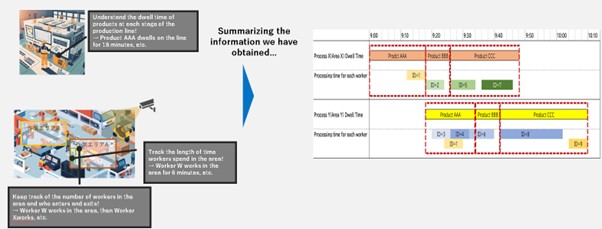
Labour remains one of the most significant cost components in manufacturing and logistics, yet it is also one of the least precisely measured. Traditional time tracking systems record schedules and attendance but provide limited insight into how time is actually spent across production zones, workstations, or warehouse areas.
OCTOps enables objective, real-time observation of workforce activity by analysing visual data from production and logistics areas. The platform can measure presence, movement, and task execution (or lack of) within defined operational zones, and correlate this information with production outputs sourced from PLCs or enterprise systems. Through optical character recognition and visual markers, work activities can be associated with specific production records without introducing additional manual input.
This approach allows organisations to move beyond estimates and assumptions, enabling accurate labour costing, identification of bottlenecks, and meaningful productivity benchmarking across lines and facilities.
Inventory and Material Flow Monitoring
Inventory accuracy is a persistent challenge in high-throughput manufacturing and logistics environments. Manual stocktaking is labour-intensive, disruptive to operations, and prone to error, particularly for large or fast-moving items such as pallets and containers.
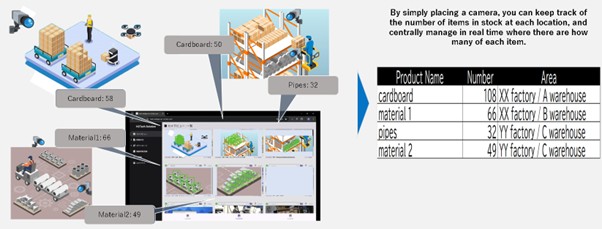
OCTOps applies visual intelligence to inventory monitoring by continuously observing storage areas, staging zones, and inbound or outbound flows. Using fixed cameras or mobile devices, the platform can count materials automatically without interrupting operations. Because the analysis is visual, it does not depend on tagging or invasive infrastructure changes.
By maintaining an up-to-date visual understanding of inventory levels and movement, organisations can reduce discrepancies, improve planning accuracy, and lower the operational cost of inventory management.
Automated Visual Inspection for Quality Control
Quality inspection is one of the most mature applications of computer vision, yet it remains difficult to scale reliably across diverse production environments. Variations in lighting, product design, and production speed often limit the effectiveness of static inspection solutions.
OCTOps addresses this challenge by embedding inspection capabilities within a broader visual intelligence platform. Defect detection models operate continuously at production speed, identifying issues such as surface defects, misalignment, contamination, or packaging errors. Crucially, the platform’s integrated data collection and retraining pipeline allows inspection models to evolve as products, materials, or conditions change.
This results in more consistent quality enforcement, reduced rework and scrap, and improved first-pass yield, without increasing inspection labour.
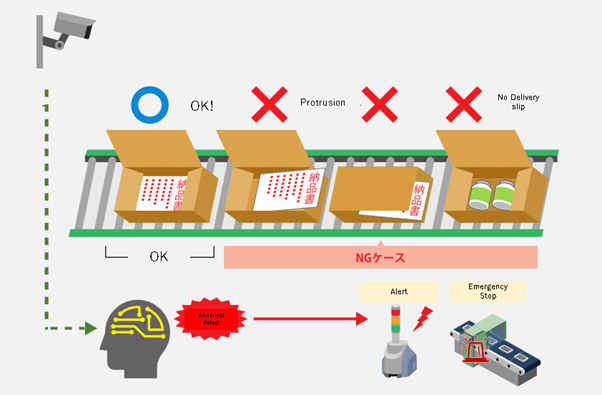
A recent Case Study, one of our clients faced a significant challenge within a shipping facility where an automatic box sealing machine operated at a blistering pace, processing approximately 4,000 boxes every hour. At this velocity, human inspection is impossible yet ensuring that every box contains the correct delivery slips and meets quality standards is non-negotiable.
To bridge the gap between speed and quality, OCTOps provides a robust Anomaly Detection system tailored for visual inspection. Our solution acts as a vigilant guardian, continuously monitoring the contents of each shipping box as it passes through the sealing line. The moment the system identifies an inappropriate condition, such as a missing or incorrect delivery slip, it communicates directly with the machine’s PLC (Programmable Logic Controller). This seamless integration triggers an immediate halt to the sealing process, preventing defective packages from moving further down the supply chain. The system has been operating continuously for over five years across three distinct locations in Japan. Its longevity demonstrates both its reliability and its essential role in maintaining quality control within high-volume logistics operations, proving that automation and precision can go hand-in-hand.
Equipment Panel and Machine Status Monitoring
Many manufacturing environments rely on equipment that displays critical information locally through digital or analogue panels. Integrating these machines directly into digital monitoring systems can be costly or technically impractical.
OCTOps provides an alternative approach by using AI-driven optical character recognition to read machine displays visually. Warnings, alarms, and abnormal states can be detected in real time without direct machine integration. When anomalies occur, the system automatically captures contextual video footage, providing maintenance teams with valuable insight into conditions before and after the event.
This capability improves response times, supports root-cause analysis, and reduces the impact of unplanned downtime.
Safety and Compliance Monitoring
Safety incidents remain a major risk in manufacturing plants and logistics facilities, particularly in environments involving heavy machinery, forklifts, and high worker density. While policies and training are essential, enforcement often depends on human supervision that cannot be present everywhere at all times.
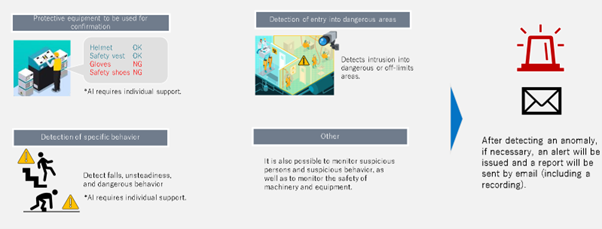
OCTOps enables continuous safety monitoring by detecting PPE compliance, unauthorised access to restricted zones, and hazardous behaviours such as unsafe movement or falls. Rather than replacing human oversight, the platform augments it by providing consistent, objective observation across all operational areas.
The result is a stronger safety culture, reduced incident rates, and improved compliance without increasing supervisory burden.
A recent Case Study, one of our client uses OCTOps to verify circuit breaker status during statutory inspections. In industrial facilities, safety is not just a priority; it is a legal requirement. Periodically, factories must undergo statutory power outages to perform critical insulation resistance tests. During these windows, the entire electrical distribution board is mass-switched OFF.
Once the testing is complete, the power must be restored. However, this restoration process carries significant risk. Every circuit breaker must be returned to its exact original state. A single switch left in the wrong position can lead to equipment failure, operational downtime, or even severe safety hazards. In the pressure of a maintenance window, relying solely on human memory and manual checks introduces the potential for costly error.
Our client needed a way to guarantee that every circuit breaker was verified before and after the inspection process. The question was simple but high-stakes: How do we ensure 100% accuracy in restoring power configurations without slowing down the maintenance workflow?
Manual verification is prone to fatigue and oversight. With dozens of switches on a distribution board, the likelihood of a human technician missing a single discrepancy is a risk the client could not afford to take. They needed an objective, unblinking eye to validate the status of every switch.
In this case OCTOps act as a digital safety net during these critical maintenance windows. Using high-resolution camera footage mounted near the distribution boards, OCTOps AI model was trained to recognise the precise visual cues of circuit breakers in both the ON and OFF positions. The system operates in two critical phases: 1) Pre-Inspection Baseline: Before the mass switch-off, the AI records the original status of every breaker. 2) Post-Inspection Verification: After the insulation resistance test is complete and technicians have restored the power, the AI scans the board again.
By comparing the post-inspection footage against the original baseline, the system instantly identifies any discrepancies. If a breaker does not match its original state, the system flags the anomaly immediately, allowing technicians to correct the error before energising the full system.
Platform Designed for Continuous Improvement
One of the most significant challenges in industrial AI is sustainability. Models that perform well during pilot phases often degrade over time as conditions change. OCTOps is designed to address this reality through continuous learning and centralised orchestration.
AI models are deployed at the edge, where they observe real operational conditions. The data generated, both successful detections and errors, is then used to retrain and refine models in a controlled deployment cycle. Updated models are redeployed across facilities, ensuring consistent improvement without operational disruption.
By unifying multiple AI capabilities within a single platform, OCTOps also eliminates the fragmentation that often undermines AI initiatives. Inspection, safety, productivity, and monitoring models operate within a shared ecosystem, enabling holistic insight rather than isolated metrics.
Business Impact in Manufacturing and Logistics
Across manufacturing and logistics environments, OCTOps has demonstrated measurable impact. Organisations have reduced manual inventory workload, scaled quality inspection beyond human limits, improved production consistency, shortened downtime response, and strengthened safety enforcement. These outcomes translate directly into cost savings, risk reduction, and improved operational resilience.
More importantly, OCTOps establishes a foundation for ongoing optimisation. As operations evolve, the platform evolves with them continuously adapting to new layouts, products, and workflows.
Why Mitrais
Successful deployment of visual intelligence in industrial environments requires more than advanced technology. It requires an understanding of operational realities, integration constraints, and change management.
Mitrais brings over three decades of experience delivering enterprise solutions in Indonesia, supported by a strong local presence and deep integration expertise. As a delivery partner for OCTOps developed by CAC Japan, part of CAC Holdings Group, Mitrais combines proven technology with the practical knowledge required to deploy and scale AI in real manufacturing and logistics environments.
From initial assessment and pilot deployment to full-scale rollout and optimisation, Mitrais supports organisations throughout their visual intelligence journey.
Conclusion
Manufacturing and logistics operations are becoming more complex, not less. In this environment, visibility is no longer optional, it is foundational.
OCTOps enables organisations to unlock the operational intelligence already present in their facilities by transforming cameras into intelligent sensors. By bridging the gap between physical operations and digital insight, OCTOps empowers manufacturers and logistics providers to operate more efficiently, safely, and competitively.
The future of industrial operations is not just automated, it is observable, adaptive, and intelligent.
Eric Vongphit: The Art of Building Something That Lasts
Eric Vongphit has a clear way of thinking about his work. He is less interested in what solves the immediate problem, and more interested in what will still hold up a year from now.
That focus runs through everything he does.
His career has spanned engineering, leadership, and commercial consulting, with each stage building on the last. Engineering gave him a deep understanding of how complex systems are built. Leadership taught him how to bring people together to make those systems work. Consulting brought both together, adding the discipline of shaping solutions that are not only technically sound, but commercially practical.
“I understand how things are built,” Eric says, “but also how they need to be positioned and sustained commercially.”
In client conversations, he does not arrive with a ready answer. He starts by understanding what the organisation is genuinely trying to achieve, and what will still work as the business grows or changes.
“The challenge is not just delivering something,” he says. “It is delivering something scalable and sustainable. Something that works today can shift within a year.”
That thinking comes from experience. Eric has seen how easy it is for well-built solutions to lose their value when they are designed only for the short term. So his instinct is always to look beyond the immediate problem and ask what will continue to serve the client, not just what solves the immediate need.
When asked what mindset he values most, his answer is simple: “How do we make this work?” It is a practical question, but it reflects something consistent in how he approaches people and problems, focused on progress, not on why something might not be possible.
Outside of work, Eric spends much of his time with his family. His two daughters are both passionate about dance, and weekends are often shaped around that. He also plays golf, which he values as much for the mental reset it offers as for the game itself.
That same long-term thinking defines how Eric works. He is not just focused on delivering solutions, but on building relationships and trust that last.
We use cookies to improve your experience, understand how our website is used, and support relevant marketing. Learn more in our Privacy Policy or manage your cookie preferences at any time.Accept All